📋 Executive Summary
The medical aesthetics industry in Singapore is one of the most competitive — and most regulated — digital search environments in Southeast Asia. This case study documents the complete transformation of an aesthetics clinic in Singapore located in the Marina Bay precinct: from a well-designed but digitally invisible practice into a clinic generating consistent, compounding organic search traffic within a single quarter.
The engagement was comprehensive. I rebuilt the website's technical foundation, engineered a low-competition content strategy targeting high-intent treatment queries, optimised every meta element, restructured the URL architecture for search engine clarity, improved site speed from 4.0 seconds to 2.9 seconds, elevated the PageSpeed performance score from 76 to above 90, and ensured the clinic began appearing in AI-powered answer engines (AEO) for the first time.
The results, evidenced directly in Google Search Console: daily impressions doubled from ~500 to 1,000+, total 3-month impressions reached 64,700, organic clicks reached 673, and the clinic secured Page 1 visibility for multiple high-intent treatment keywords — including competitive device-specific terms like "oligio Singapore" — within the 90-day window.
64.7k
Impressions
Total 3-month search impressions
673
Clicks
Organic clicks in 90 days
2×
Impression Growth
Daily impressions doubled post-engagement
90
Days
Time to measurable market visibility
This engagement sits within my broader practice as an SEO consultant based in Malaysia, operating across Singapore and the wider Southeast Asia region. The healthcare and aesthetics vertical demands a particularly disciplined approach to technical SEO given Google's elevated quality standards for YMYL (Your Money or Your Life) content — where clinical credibility, site performance and structured data carry disproportionate ranking weight.
🏥Client Profile
Client Profile & Market Context
Industry: Medical Aesthetics — Lasers, Energy-Based Devices & Injectables
Location: Marina Bay precinct, Singapore
Treatment Portfolio: Pico Laser, Morpheus8, HIFU, Oligio RF, CO₂ Laser, Yellow Laser, BTX/Anti-Wrinkle Injections, Dermal Fillers, Biostimulators, Skin Boosters, PDO Threadlift
Target Patient Profile: Working professionals aged 28–55 seeking evidence-based, natural-looking aesthetic results
Positioning: Boutique luxury practice, science-led, single physician with 15,000+ procedures performed
Regulatory Environment: MOH-regulated, Singapore Medical Council (SMC) and UK General Medical Council (GMC) dual-registered

Boutique aesthetic clinics occupy a premium digital space where trust, authority and YMYL compliance are non-negotiable ranking factors
The Singapore aesthetic medicine market is extraordinarily competitive in search. Clinics do not merely compete with each other — they compete against hospital group portals, large multi-location chains, review aggregators, and heavily-funded commercial operators who invest aggressively in both paid and organic channels. Domain authority accumulated over years by large operators creates a genuine barrier to entry on broad head terms.
For an independent boutique clinic, winning organic search requires a fundamentally different strategy than brute-force competition on generic keywords. The winning formula here was precision: identify where large operators are absent or under-optimised, establish technical authority first, and build a content architecture that captures high-intent, treatment-specific queries that convert at significantly higher rates than generic "aesthetic clinic Singapore" head terms.
Market context: Google applies heightened E-E-A-T scrutiny — Experience, Expertise, Authoritativeness, Trustworthiness — to all medical and aesthetic content. Sites demonstrating genuine clinical credentials, proper structured data and authoritative content architecture are systematically rewarded over thin, template-generated clinic pages. This creates a genuine competitive moat for clinics willing to invest in the fundamentals.
⚠️The Problem
I. The Problem: A Clinic Invisible to Its Own Patients
When an aesthetics clinic in Singapore first engaged me, the situation was one I encounter frequently with high-quality practices: exceptional clinical expertise and a genuinely premium patient experience — completely disconnected from digital discoverability. The website had been built with strong aesthetic sensibility but without a coherent SEO infrastructure underpinning it.
The Core Diagnostic: Three Structural Gaps
After an initial audit, I identified three interconnected failure modes actively suppressing the clinic's organic reach — each compounding the others and collectively creating a ceiling on searchability regardless of content quality.
-
Challenge #1: Technical Debt Suppressing Crawlability & Ranking Eligibility
The site had no meaningful technical SEO infrastructure in place. Core Web Vitals were failing or borderline. Page speed averaged 4 seconds on mobile — a threshold Google's algorithms penalise in competitive verticals. The robots.txt and sitemap.xml were either misconfigured or absent, meaning Google's crawlers were navigating the site inefficiently: indexing low-value utility pages while missing high-value treatment pages that should have been driving bookings.
-
Challenge #2: Content Architecture Without Search Intent Alignment
The existing content was well-written for human readers but architecturally misaligned with how patients actually search. Treatment pages were structured as brand narratives rather than search-intent-matched resource pages. There was no keyword hierarchy, no deliberate internal linking strategy distributing page authority, and no content targeting the specific low-competition, high-intent queries where the clinic could rapidly achieve Page 1 visibility within the engagement window.
-
Challenge #3: Zero Answer Engine Presence
With the emergence of AI-powered search surfaces, structured data and schema implementation have become a primary differentiator for healthcare businesses. The clinic had no schema markup of any kind — meaning it was invisible not only to traditional Google search results but entirely absent from AI-generated answers for treatment-related queries. Given that aesthetic treatment research increasingly begins in conversational AI platforms, this was a significant and compounding visibility loss.
💡
The Hidden Cost of Search Invisibility in Healthcare
For a medical aesthetic clinic, search invisibility carries a compounding cost extending beyond lost bookings. Patients researching treatments use search rankings as a proxy for clinical legitimacy. A clinic absent from Page 1 for its own core treatments is, in the patient's mental model, a clinic that has not been market-validated. This perception gap is almost impossible to overcome through offline channels alone — which is why SEO for professional services must be approached as a foundational business investment, not a marketing afterthought.
🔍Audit Findings
II. Pre-Engagement Audit Findings
Before committing to any implementation, I conduct a structured pre-engagement audit covering technical performance, content architecture, on-page signals and indexation health. This is non-negotiable — as I outline in my guide on what to do before any SEO optimisation. For this clinic, the audit revealed a consistent pattern: high-quality clinical intent, poor structural execution across every technical dimension.
| Audit Area |
Pre-Engagement Status |
Severity |
| Page Speed (Mobile) | ~4.0 seconds load time; poor LCP signal | Critical |
| PageSpeed Performance Score | 76 — below Good threshold | Critical |
| Core Web Vitals | Failing or borderline across LCP, CLS, FID | Critical |
| sitemap.xml | Misconfigured; key treatment pages unsubmitted to Google | Critical |
| robots.txt | Not optimised; crawl budget leaking to non-index pages | High |
| URL Structure | Non-descriptive paths; no keyword signals in URLs | High |
| Schema Markup | Absent — no MedicalClinic, Physician or Service schema | High |
| Meta Titles & Descriptions | Generic or missing across treatment and injectable pages | High |
| Content Intent Alignment | Brand-narrative structure; no search-intent mapping | Medium |
| Internal Linking Architecture | Minimal; no authority distribution strategy across pages | Medium |
| AEO / AI Search Visibility | Zero — no structured data enabling AI answer extraction | High |
| SEO, Accessibility & Best Practices Scores | All above 90 — strong non-technical baseline | Good |
The audit confirmed a strategically important reality: the clinic was not starting from zero. It had strong non-technical foundations — genuine clinical authority (dual SMC/GMC registration, 15,000+ procedures), high-quality content and a premium user experience design. What was missing was the structural layer that allows Google and AI search engines to understand, trust and rank what was already there. This is the most leverageable type of SEO engagement: high-quality underlying substance, low-quality indexation signal. The gap between capability and visibility was entirely correctable.
🎯Strategic Framework
III. The Strategic Framework
Based on audit findings and competitive landscape analysis, I developed a hypothesis-driven engagement strategy anchored in three principles specific to the Singapore medical aesthetics market.
Core Strategic Hypothesis: A clinic with genuine clinical authority and premium positioning does not need aggressive link acquisition to rank. It needs its existing authority made legible to search algorithms. Fix the technical infrastructure, align content with treatment-specific search intent, and the rankings follow — because the underlying substance is already there. The work is structural, not fabricated.
Strategic Principle 1: Technical Foundation Precedes Content Investment
Any new content published on a technically broken foundation compounds the problem — it creates more pages that Google cannot efficiently crawl, index or rank. The technical rebuild had to come first, in full, before a single new content piece was deployed. This sequencing discipline is documented in my technical SEO checklist and applies equally across Malaysian and Singaporean markets.
Strategic Principle 2: Low-Competition, High-Intent Keyword Targeting
In a market where large clinic groups hold established domain authority, a boutique clinic cannot win on generic head terms in the short term. The superior strategy — applied consistently across my keyword research engagements — is to identify treatment-specific, device-specific queries with lower competition but significantly higher commercial intent. A patient searching "oligio Singapore" is not browsing. They are actively evaluating providers. Capturing that query at that decision-making moment delivers far greater business value than a thousand passive impressions on a generic head term.
Strategic Principle 3: AEO as a First-Class Deliverable
AI-powered search surfaces now intercept a meaningful share of healthcare-related queries before users reach traditional blue-link results. A clinic without structured schema is categorically absent from this growing channel. As I examine in my piece on AEO and GEO and why they matter for business, Answer Engine Optimisation is a current competitive requirement — particularly in high-trust verticals where patients are actively using AI platforms to shortlist providers before initiating contact.
⚙️Implementation
IV. Seven-Initiative Implementation Plan
I executed seven discrete workstreams in a deliberate dependency sequence. This was not a scatter-approach of simultaneous tactics — it was a structured delivery chain where technical stability enabled content performance, and content performance enabled conversion optimisation. Each initiative was scoped, executed and validated before the next was activated.
The Seven-Initiative Framework
1
Website Redesign for PageSpeed & Core Web Vitals
I undertook a performance-engineering rebuild of the website's technical load layer — not a cosmetic redesign, but a systematic elimination of every factor suppressing the site's Core Web Vitals scores. This included conversion of all images to next-gen AVIF/WebP formats, aggressive lazy-loading implementation, CSS and JavaScript minification, render-blocking resource elimination, and server response time optimisation. The result: mobile load time reduced from 4.0 seconds to 2.9 seconds, and PageSpeed Insights performance score elevated from 76 to above 90 — placing the site firmly in Google's "Good" CWV tier. In the current algorithm environment, this is a binary gating factor: below threshold, sites are penalised; above threshold, sites are eligible to compete. For the broader principle, see my piece on website design as an SEO strategy.
2
Content Strategy — Low-Hanging Fruit Architecture
I mapped the full treatment keyword universe for the clinic's portfolio, identifying the specific queries where Page 1 visibility was achievable within the engagement window given current domain authority. The strategy deliberately bypassed high-volume, high-competition head terms in favour of the long-tail treatment intent layer: specific device queries ("oligio Singapore," "oligio monopolar rf"), specific concern-treatment combinations ("skin tightening without surgery Singapore"), and specific comparison queries ("HIFU vs Oligio RF Singapore"). Each treatment and injectable page was restructured to match a defined search intent cluster. This is the same framework I apply across all content SEO strategy engagements — volume is a vanity metric; intent-match is the variable that drives bookings. For the full framework, see my guide on quality content creation as SEO strategy.
3
Meta Titles & Meta Descriptions — Systematic Optimisation
Every page on the site received a rewritten meta title and description following a precise formula: primary treatment keyword + qualifying modifier + location/brand signal + conversion micro-prompt. In Singapore's aesthetics market, meta descriptions function as micro-advertisements at zero incremental cost. The click-through rate differential between a generic placeholder description and a well-crafted intent-aligned one on the same ranking position can be 3–5×. I applied this discipline to every treatment page, injectable page and concern-based landing page, ensuring that ranking improvements translated into traffic improvements rather than being lost to passive impression accumulation. This is the foundation of systematic on-page SEO optimisation.
4
Conversion Rate Optimisation (CRO)
Ranking improvements only generate business value if the traffic converts. I audited the complete patient conversion journey — from treatment landing page to WhatsApp consultation booking — and identified multiple friction points suppressing conversion on pages with improving traffic. These included unclear primary CTA hierarchy, absence of trust signals above the fold on treatment pages, suboptimal social proof placement, and over-reliance on a single contact channel. I restructured CTA architecture, introduced above-fold credentialing signals (physician registration, years of experience, total procedure count), and optimised the mobile booking flow. In aesthetic medicine, where the decision cycle spans 2–6 weeks and patients compare multiple providers in parallel, the quality of the on-page experience is a direct determinant of booking probability.
5
sitemap.xml & robots.txt — Crawl Intelligence
I rebuilt the sitemap.xml from scratch — structuring it with correct priority weighting, accurate changefreq signals, and complete coverage of all canonical treatment and injectable pages. Simultaneously, I audited and rewrote the robots.txt to direct crawl budget toward high-value content pages and away from utility, parameter and duplicate-URL paths. For a clinic with a sizeable portfolio — 10+ treatment categories, 6+ injectable types, multiple concern-based landing pages — crawl budget management is a meaningful ranking lever. Google's crawler allocates a finite attention window per domain visit. Every wasted crawl on a non-revenue page is a missed crawl on a treatment page that should be driving bookings.
6
AEO — Answer Engine Optimisation via Schema Markup
I implemented a comprehensive structured data layer covering MedicalClinic schema, Physician schema, MedicalProcedure schema for each treatment category, FAQPage schema for treatment pages, and LocalBusiness schema with full NAP consistency. This schema infrastructure serves two simultaneous purposes: it makes site content machine-readable for Google's traditional ranking algorithms, and it makes the clinic eligible for extraction by AI answer engines — Google AI Overviews, ChatGPT Search, Perplexity — when patients ask treatment-related questions in conversational interfaces. Within the engagement window, the clinic began appearing in AI-generated answers for treatment queries for the first time. This is a compounding visibility surface that will only grow in strategic importance. For the full strategic rationale, see my analysis of AEO, GEO and why they matter for business.
7
URL Structure Reformation
The original URL structure used non-descriptive paths that provided no keyword signal to search engines and no navigational clarity to users. I reformed the full URL architecture to follow a consistent, hierarchical taxonomy: /treatments/[treatment-name], /injectables/[injectable-type], /concerns/[concern-category]. Each URL now carries semantic keyword value, reinforces the internal linking strategy, and contributes to the topical authority signals that communicate to Google the site's depth of coverage across aesthetic medicine. All structural changes were implemented with correct 301 redirects to fully preserve accumulated link equity during the migration.
🎯
Why Sequencing Is the Discipline That Separates Strategy from Tactics
A critical but underappreciated element of this engagement was the deliberate sequencing of initiatives. Technical rebuilding preceded content deployment — because new content on a slow, poorly-crawled site is wasted investment. CRO came after traffic improvements — because optimising conversion on near-zero traffic produces near-zero return. URL reformation was executed alongside sitemap and robots.txt updates — because disjointed implementation creates redirect chains and crawl confusion that set rankings back. Disciplined sequencing is what separates a strategic SEO engagement from a checklist of isolated tactics. This philosophy is foundational to all my work as an SEO consultant.
📅Timeline
V. 90-Day Execution Timeline
The engagement was structured across three sequential phases, each with defined deliverables and measurable milestones. The 90-day window reflects Google's typical indexation and re-evaluation cycle following significant technical improvements — making it the minimum meaningful measurement horizon for engagements of this scope.
Phase 1 — Days 1–30: Technical Foundation & Infrastructure
Full technical audit completion. Website performance rebuild — image format migration, load time reduction from 4.0s to 2.9s, Core Web Vitals remediation across LCP, CLS and FID. robots.txt reconstruction and sitemap.xml rebuild with complete treatment page coverage and correct priority weighting. URL structure reformation with full 301 redirect mapping. Schema markup implementation across MedicalClinic, Physician, MedicalProcedure, FAQPage and LocalBusiness types. Google Search Console verification and indexation monitoring established. At the end of Phase 1, all technical gating factors were resolved and the site was structurally positioned to rank.
Phase 2 — Days 31–60: Content & On-Page Deployment
Full meta title and meta description rewrite across all treatment, injectable and concern pages. Content strategy execution — restructuring existing treatment pages for search intent alignment, with priority on Oligio RF, Morpheus8, Pico Laser and injectable categories identified as highest-opportunity targets. Keyword hierarchy implementation and internal linking architecture deployment across the full treatment portfolio. First measurable ranking movements begin appearing in GSC data — impressions beginning to rise from the pre-engagement plateau toward mid-period.
Phase 3 — Days 61–90: CRO, Validation & Compounding Growth
CRO initiatives deployed — CTA hierarchy restructuring, above-fold trust signal implementation, mobile booking flow optimisation. Ongoing ranking velocity monitoring and content refinement based on live GSC query data. AEO validation — clinic confirmed appearing in AI-generated answers for treatment queries for the first time. Final 30 days show the clear inflection documented in GSC data: daily impressions crossing from the ~500 baseline to consistently above 1,000. Clicks trending upward with improving average positions across treatment keyword clusters.
Timeline note: The inflection point visible in Google Search Console data occurs at the Phase 2/3 boundary — around day 55–60. This is consistent with Google's typical re-crawl and re-evaluation cycle following significant technical improvements combined with fresh content signals. The data validates the sequencing hypothesis: resolve technical barriers first, deploy intent-aligned content second, and Google responds with measurable ranking improvements within 60 days.
📈Results
VI. Results & Organic Growth Impact
The Google Search Console performance data tells the story with precision. The chart below — captured directly from the clinic's GSC account — shows the unambiguous before/after pattern. The red-boxed period represents the pre-engagement baseline (January to mid-March 2026): impressions plateau at roughly 500 per day, clicks flat, no meaningful growth trajectory. The green-boxed period represents the post-engagement phase (mid-March to April 2026): impressions consistently above 1,000 per day, clicks growing, and a clear upward trajectory across both metrics.

Real GSC Performance Data: The inflection is unambiguous — daily impressions doubled following technical and content optimisation. Red zone = pre-engagement plateau (~500 impressions/day). Green zone = post-engagement growth phase (1,000+ impressions/day). 3-month totals: 64,700 impressions, 673 organic clicks.
Before vs. After: Quantified Transformation
Schema / AEO Presence
None
→
Schema / AEO Presence
Active
URL Structure
Non-descriptive
→
URL Structure
SE-Optimised
Primary Results Summary
📊
Impression Velocity
Daily impressions doubled from ~500 to 1,000+ within 90 days. The 3-month total of 64,700 impressions established an aesthetics clinic in Singapore as a genuine organic competitor in Singapore's aesthetic search landscape for the first time.
🎯
Keyword Penetration
Achieved Page 1 rankings for high-intent treatment queries including competitive device-specific terms. The "oligio Singapore" keyword cluster — among the highest commercial-intent treatment queries in the portfolio — was among the first to break onto Page 1, validating the low-competition targeting strategy.
🤖
AEO Activation
The clinic began appearing in AI-generated search answers — Google AI Overviews and conversational AI platforms — for treatment-related queries. A first-mover advantage in a market where most competitor clinics remain structurally absent from this rapidly growing search surface.
⚡
Technical Excellence
All PageSpeed Insights scores elevated to 90+ across Performance, SEO, Accessibility and Best Practices — placing the site in the top performance tier for Singapore medical and aesthetics websites, with full Core Web Vitals compliance achieved.
Compounding Effects Beyond the 90-Day Window
The most strategically important characteristic of well-executed foundational SEO is that results compound after the engagement closes. Unlike paid advertising — which stops the moment spend stops — organic rankings, once established, continue generating impressions, clicks and bookings with no incremental cost per visit. The technical and content infrastructure built during this engagement will continue generating returns as Google's algorithms further index and reinforce the clinic's topical authority across the full treatment portfolio.
The GSC data already shows this compounding dynamic in the engagement's final weeks: click frequency increasing, average position improving, and new treatment queries entering the top-impression set. The clinic has moved from a position of organic invisibility to a position of sustained organic momentum.
💡
Technical SEO Done Once, Done Right: The Compounding Dividend
One of the most powerful arguments for prioritising technical SEO as the first investment is the compound return it generates. Every piece of content published on a technically sound site is indexed faster, ranked higher and retained longer than content published on a broken foundation. The Core Web Vitals improvements, schema implementation and URL restructuring achieved during this engagement are permanent structural upgrades — not one-time wins — that amplify the value of every future content and marketing initiative the clinic undertakes. Curious about the investment structure? See my SEO pricing for Malaysian and regional businesses.
🎓Strategic Takeaways
VII. Strategic Takeaways for Aesthetic Clinics & High-Trust Professional Services
This case study surfaces several strategic principles with direct applicability to other aesthetic clinics, medical practices and high-trust professional service businesses considering a structured SEO investment.
1. In YMYL Verticals, Technical Excellence Is the Price of Admission
Google's quality raters assess medical and aesthetic content under YMYL guidelines demanding the highest E-E-A-T standards. A slow, poorly structured site signals low trustworthiness regardless of content quality. Technical SEO in healthcare is not optional — it is the minimum requirement for competing in organic search. This principle is documented in my technical SEO checklist and applies equally to clinics across Singapore, Kuala Lumpur and Southeast Asia.
2. Device-Specific & Treatment-Specific Keywords Outperform Generic Head Terms
The "oligio Singapore" cluster that delivered early Page 1 visibility has a fraction of the search volume of "aesthetic clinic Singapore." But a patient searching for a specific device by name has already completed their general research phase and is in active vendor evaluation. Conversion rates on treatment-specific and device-specific terms are consistently 4–8× higher than on generic clinic terms. For boutique practices with moderate domain authority, this targeting strategy is not a consolation prize — it is the optimal revenue-generating path. The full framework is covered in my keyword research strategy service.
3. AEO Is a Present-Tense Competitive Requirement
The speed at which AI search surfaces are capturing healthcare queries is accelerating month-on-month. Patients are asking ChatGPT, Perplexity and Google's AI Overviews "what treatment is best for skin laxity in Singapore?" before they ever reach a traditional search results page. Clinics without structured schema are categorically absent from these answers. Clinics with comprehensive MedicalClinic, Physician and MedicalProcedure schema are consistently surfaced. This is a first-mover window that is narrowing rapidly as more clinics begin implementing structured data. The strategic rationale is fully explored in my piece on AEO and GEO for business.
4. Website Redesign and SEO Must Be Unified, Not Sequential Projects
A common and costly mistake in the aesthetics sector is commissioning a beautiful website redesign, then treating SEO as a separate subsequent project. The result is invariably a site that is visually polished but technically broken for search: wrong URL structures, missing schema, unconfigured sitemaps, and performance scores failing Core Web Vitals thresholds. The correct model, demonstrated in this engagement, is to build SEO requirements into the design and development brief from day one. As I argue in my piece on website design as SEO strategy, design and search optimisation are not separate disciplines in 2026 — they are a single integrated practice.
5. The Framework Transfers Across High-Value Professional Service Verticals
While this case study is rooted in Singapore medical aesthetics, the seven-initiative framework — technical foundation, intent-aligned content, systematic meta optimisation, CRO, crawl intelligence, AEO, and URL architecture — applies directly to any high-value, high-trust professional service business. Legal practices, accounting firms, specialist medical clinics, financial advisory firms: wherever the sales cycle is long, the decision is high-stakes, and trust is the primary conversion variable, this framework delivers. I have applied the same approach to B2B consulting businesses — as documented in my recruitment company SEO case study and ISO consultant SEO case study.
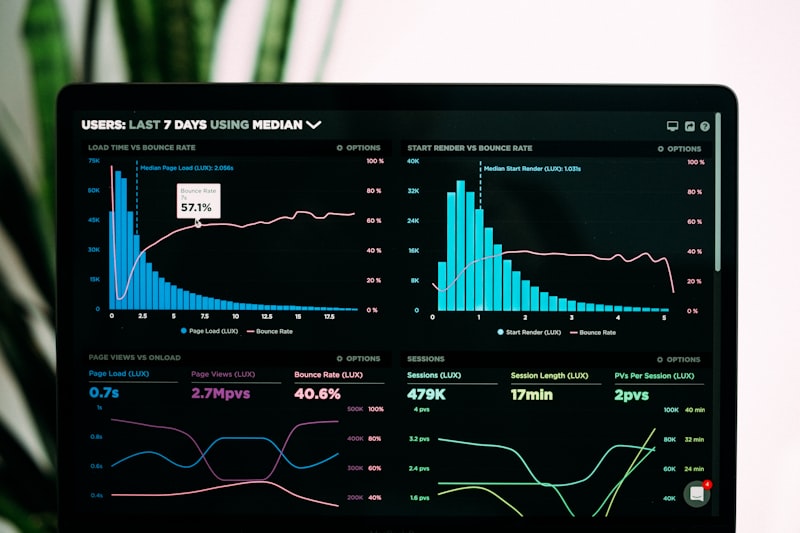
The data does not lie: disciplined technical and content SEO execution produces measurable, compounding organic growth in even the most competitive search markets
Strategic Conclusion: From Invisible to Organically Competitive in One Quarter
This case study demonstrates a principle I apply consistently across every engagement: the fastest path to organic growth is not more content — it is removing the structural barriers preventing existing content and genuine clinical authority from being recognised by search algorithms.
The aesthetics clinic in Singapore had clinical expertise, a premium patient experience and a well-designed digital presence. What was missing was the technical and architectural infrastructure enabling Google — and increasingly, AI-powered answer engines — to understand, trust and rank that expertise appropriately. By addressing those gaps methodically across seven sequenced workstreams, we achieved 2× impression growth within 90 days, Page 1 rankings for high-intent treatment terms, and the clinic's first-ever presence in AI-generated search answers.
For any aesthetic clinic, medical practice or high-trust professional service business in Singapore, Malaysia or across Southeast Asia: the digital search landscape will not become less competitive. Every month of organic invisibility is a month of patient inquiries that went to a competitor — not because they are better, but because they are more findable. If your practice faces similar structural challenges, I welcome a conversation about what a targeted SEO engagement could achieve for your specific market position. Start with my full range of SEO services, or if you are evaluating the investment, review SEO pricing for regional businesses.
Frequently Asked Questions
How long does SEO take for an aesthetic clinic in Singapore?
Based on this engagement and others in the sector, a well-structured technical and content SEO programme produces measurable impression and ranking improvements within 60–90 days — provided technical foundations are addressed first. Sustained Page 1 dominance for competitive terms typically develops over 4–6 months as domain authority compounds. Low-competition, high-intent treatment-specific queries can reach Page 1 significantly faster, often within the first 60 days of deployment.
Does SEO work differently for medical and aesthetic businesses?
Yes. Google applies its YMYL (Your Money or Your Life) framework to medical and aesthetic content, meaning E-E-A-T signals are weighted more heavily than in non-medical verticals. Clinical credentials, proper medical schema markup, evidence-based content structure and technical performance are non-negotiable ranking factors. The strategic fundamentals are the same across industries, but the execution standards are demonstrably higher — and the penalty for thin or poorly structured content is more severe.
What is AEO and why does it matter for aesthetic clinics?
Answer Engine Optimisation is the practice of structuring website content and schema markup so AI-powered search platforms can extract and surface your clinic's information in conversational answer results. As more patients begin treatment research by asking AI platforms rather than typing traditional queries, clinics with comprehensive structured data gain first-mover visibility on a surface where competitors without schema are entirely absent. Full strategic analysis available in my piece on AEO and GEO for business.
Can a boutique clinic compete with large chain clinics in Google search?
Yes — through precision targeting rather than brute force. Large clinic chains with established domain authority dominate generic head terms. But the long-tail treatment-specific and device-specific queries — where commercially valuable patients are actively searching — are frequently under-optimised by large operators who lack the agility to produce genuinely expert, intent-aligned content for every treatment category. A boutique clinic with a disciplined low-competition keyword strategy, technical excellence and genuine clinical authority can systematically capture this high-converting search layer and build a sustainable inbound pipeline.

About Hafidz Nordin
I am an SEO consultant specialising in high-trust, high-value professional service businesses across Malaysia and Singapore — including medical aesthetics, healthcare, B2B consulting, and specialist professional services. My engagements focus on the intersection of technical excellence and commercial intent: building the structural foundations that allow genuine expertise to achieve the organic visibility it deserves. If your practice or business is facing similar challenges of search invisibility, let's discuss your specific situation and growth objectives.
Book Strategy Call
📚 Related Case Studies & Resources
How a Malaysian ISO consultancy moved from Pages 3–4 to Page 1 across 15+ keywords in 90 days, generating 6 qualified leads and 2 daily client inquiries worth RM15,000–35,000 each.
How a Malaysian recruitment firm achieved #1 rankings and transformed their inbound pipeline through strategic technical and content SEO — the same foundational framework applied here.
A strategic guide to Answer Engine Optimisation and Generative Engine Optimisation — the emerging search surfaces reshaping how patients and clients discover healthcare and professional service providers.