You've invested RM15,000 in a beautiful website. Your designer delivered a stunning visual masterpiece with parallax scrolling, animated illustrations, and an eye-catching hero section.
Three months later, you're wondering why you're still on page 3 of Google while your competitor's "ugly" 2018-era website sits comfortably in position 2.
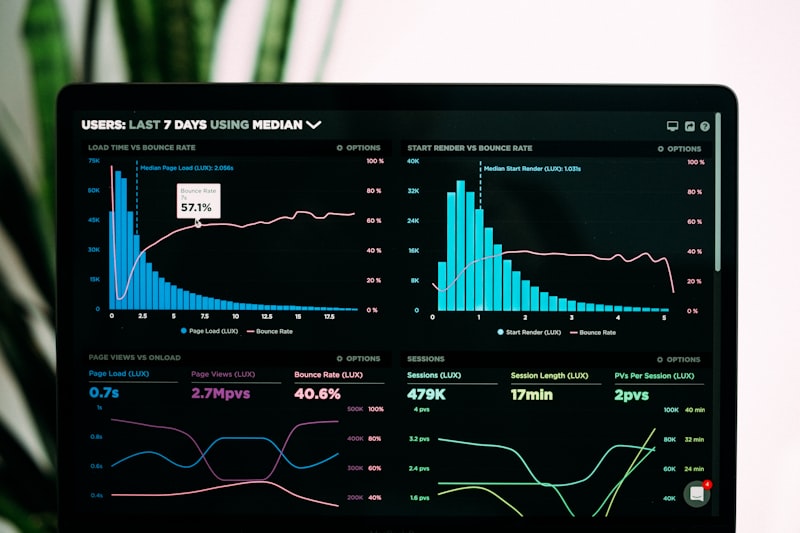
In 2025, Google's ranking algorithm has evolved far beyond keyword density and backlink counts. The search engine now evaluates how real users interact with your design—measuring bounce rates, scroll depth, click patterns, and conversion signals. Your website's visual structure has become a direct ranking factor.
For Malaysian businesses competing in saturated markets like Kuala Lumpur and Penang, understanding the intersection of design and SEO isn't optional anymore. It's the difference between generating leads and burning marketing budget.
The SEO reality: Google doesn't care if your website wins design awards. It cares if your design helps users find answers quickly and take action confidently. Every design decision either supports or sabotages this goal.
This guide reveals the three design pillars that directly impact your search rankings and provides the exact framework Malaysian businesses are using to build websites that rank and convert.
The Three Pillars of Design-Driven SEO
The connection between design and SEO operates through three interconnected systems. Master these pillars, and you'll understand why some websites dominate search results while others languish in obscurity despite perfect technical SEO.
Pillar #1: User Experience Signals — How your design influences the behavioral metrics Google tracks (bounce rate, dwell time, engagement depth)
Pillar #2: Technical Performance Architecture — How your design choices impact Core Web Vitals and page speed (loading performance, interactivity, visual stability)
Pillar #3: Conversion-Optimized Structure — How strategic content placement and CTAs signal commercial intent and user satisfaction to search engines
These aren't separate concepts. They work together as an integrated system where design decisions cascade through user behavior, technical performance, and ultimately, search rankings.
Framework principle: Good SEO makes your site visible. Good design makes it valuable. The intersection of both makes it dominant in search results.

The Three Pillars Framework: Where design decisions meet ranking performance
Pillar #1: User Experience Signals (What Happens When Users Land)
🔍 The "What" — Understanding Behavioral Ranking Factors
Google measures how users interact with your site after clicking through from search results. These engagement metrics include bounce rate (percentage who leave immediately), dwell time (how long they stay), scroll depth (how far they read), and click-through patterns (what they interact with).
When someone searches "SEO services Malaysia," lands on your homepage, spends 8 seconds scanning, then hits the back button—that's a negative signal. Google interprets this as "this page didn't satisfy the user's intent." Repeated across hundreds of users, your rankings drop.
Conversely, when users arrive, spend 3 minutes reading, scroll through your services, click to your contact page, then fill out a form—these are powerful positive signals. Google learns your page provides valuable, satisfying experiences.
⚡ The "Now What" — Design Patterns That Reduce Bounce Rates
First, implement the Above-the-Fold Value Proposition. Users decide whether to stay or leave within 3 seconds. Your hero section must immediately communicate who you help, what problem you solve, and why you're different. Avoid vague taglines like "Leading Digital Solutions Provider." Instead: "Rank Page 1 for Your Most Profitable Keywords in 90 Days."
Second, use Visual Hierarchy with Purpose. Design elements should guide the eye through your content naturally. Use size contrast (larger headlines draw attention), color contrast (bright CTAs stand out against neutral backgrounds), and spatial grouping (related content clustered together). The goal: users understand your page structure at a glance.
Third, optimize for Scannable Content Architecture. Only 16% of users read word-by-word online. The other 84% scan. Structure content with descriptive H2 and H3 headings that work as standalone mini-stories. Use short paragraphs (3-4 lines maximum), bullet points for lists, and bold text for emphasis on key phrases.

Eye-tracking patterns reveal how users scan web pages: Focus on F-Pattern design
💰 The "So What" — The Rankings Impact
A Malaysian e-commerce client redesigned their product pages using these UX principles. Within 60 days, their average session duration increased from 1:23 to 3:47, and bounce rate dropped from 68% to 41%. Google rewarded these improved engagement signals with a 9-position ranking jump for their primary commercial keywords.
The revenue impact: RM47,000 in additional monthly sales from organic traffic. Same products. Same prices. Better design that kept users engaged.
Key Takeaway
Your job isn't to make users read every word. It's to make them WANT to read every word. Strategic design creates that desire through clarity, hierarchy, and visual reward. Google watches how long users stay—make it worth their time.